
BBD Boom joins Siloy to launch UK & Ireland region presence
With this step, Siloy now surpasses 200 employees, uniting some of Europe’s top HubSpot experts under one brand. BBD Boom’s introduction represents another key step in Siloy’s...
Something fundamental has shifted in B2B sales, and the numbers from Gartner’s CSO & Sales Leader Conference 2026 make it hard to ignore.
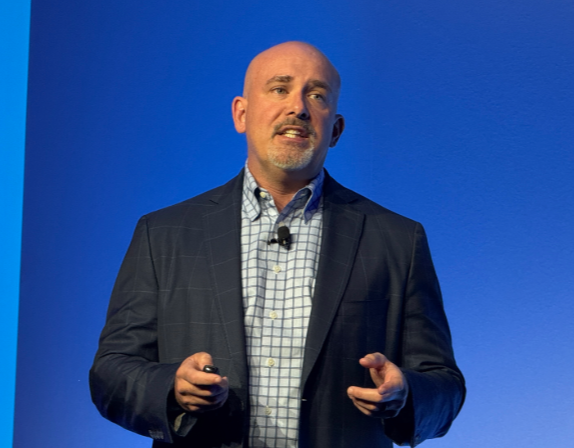
Two thirds of B2B buyers now prefer a rep-free experience during the orientation phase. They use AI to evaluate vendors, shortlist solutions, and stress-test options. Quietly, methodically, and without your sales team in the room.
And yet, 69% of those same buyers still return to a human sales rep to validate what the AI told them.
Gartner analyst Robert Blaisdell calls this the “split-brain buyer journey,” and it captures something real: buyers are delegating logic to algorithms while still craving human connection. The purchase decision is no longer linear. It is fragmented across AI agents, buying committees, and a maze of digital touchpoints, and only comes back to your rep at a very specific moment: when the buyer needs to feel confident, not just informed.
This is not a technology problem. It is a sales design problem.
The implication for go-to-market strategy is direct. Your content can no longer serve one master. Blaisdell put it plainly: you need content that speaks to the buyer’s AI agent (structured, fact-dense, frictionless) and content that speaks to the human decision-maker (empathetic, relational, trust-building). Two different registers. Two different jobs.
Most sales and marketing teams are still producing content for one audience: the human. Meanwhile, the AI agent running preliminary vendor evaluation has already moved on.
This is also why 57% of buyers report getting stuck somewhere in the buying process and unnecessarily delaying their purchase. Not because they lack information. Because the digital experience fails them at a critical moment.
Worth noting: only 33% of buyers consider AI tools offered by vendors to be trustworthy. Static, well-structured content still outperforms vendor bots in earning buyer confidence. That is a useful signal for anyone thinking about where to invest.
There is a second finding from Gartner that deserves attention, particularly for companies scaling their sales organisations.
More than half of frontline sales managers report that their actual day-to-day work bears no resemblance to their formal job description. They have become what Gartner analyst Michael Katz describes as an organisational “junk drawer,” absorbing reporting requests, approval chains, last-minute deal rescues, and training obligations all at once.
The result: overloaded managers, reduced team productivity, and a dysfunctional feedback loop where 63% of CSOs still expect managers to act as super-sellers rather than team multipliers.
Fixing this is not optional. As buying journeys grow more complex, the quality of frontline sales management becomes one of the few remaining competitive differentiators. Managers who are freed to coach, enable, and accelerate their team are measurably more effective than those buried in operational noise.
Gartner analyst Alyssa Cruz identified pipeline stalls and lengthening sales cycles as the primary threat to revenue targets in 2026. The instinct many organisations reach for, adding more touchpoints and contact moments, actively makes things worse. 73% of buyers say they avoid vendors who send irrelevant messages.
The pivot Cruz recommends is from persuasion to facilitation. Sellers who help buyers navigate internal decision-making and verify value rather than just pushing product see significantly better outcomes. Organisations that support this with AI-driven “Next Best Actions” are 2.6 times more likely to hit their growth targets.
The Gartner findings align closely with what we see in practice when working with scaling sales organisations. The teams that gain ground are the ones that have designed their CRM to support the full buyer journey, not just the pipeline stages visible to the seller.
That means content structured for discoverability, including by AI agents. It means deal workflows that reduce friction rather than add checkpoints. It means sales managers with clear, actionable dashboards rather than report-heavy inboxes. And it means using tools like HubSpot’s AI-assisted sequences and Next Best Action guidance to help reps act at the right moment, rather than the most convenient one.
The B2B buyer has split in two. The question is whether your sales infrastructure is designed for both halves.
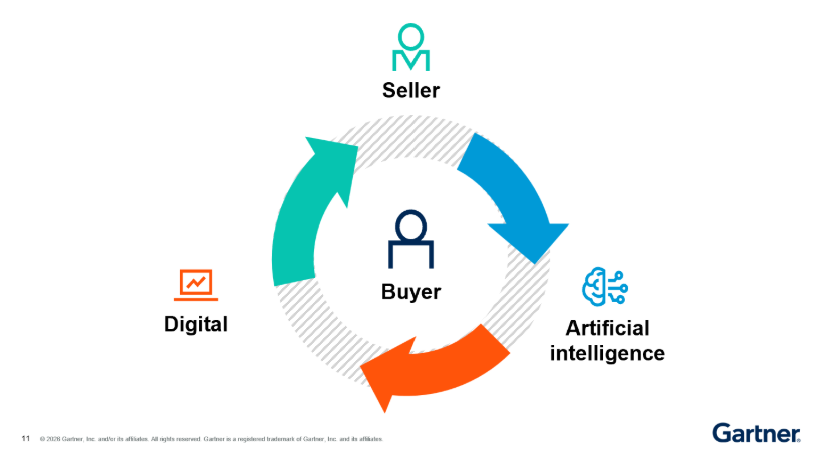
On 9 June, Gartner is hosting a free webinar recapping the key insights from the CSO & Sales Leader Conference, with a focus on how to advance your sales strategy with agentic AI. You can register here: Inside the 2026 Gartner CSO & Sales Leader Conference
If the findings resonate with what you are seeing in your own pipeline, we would be glad to talk about what they mean for your HubSpot setup.
For questions about this blog, please contact us at info@siloy.com
With this step, Siloy now surpasses 200 employees, uniting some of Europe’s top HubSpot experts under one brand. BBD Boom’s introduction represents another key step in Siloy’s...

By expanding in this way, Siloy takes another step towards its ambition of becoming a top HubSpot partner, securing a position among the market’s top three players. With Chili...

Since its founding, LEVR has established itself as one of the fastest-growing HubSpot partners in Europe, with a strong focus on the mid-market – offering agile, customer-centric...